


Faculty
Research Background
We seek to harness organic chemistry’s unique advantage of designing molecules much like assembling building blocks. By leveraging the programmability of molecular structures, tunability of elemental compositions, ease of functional-group modification, and precision of bottom-up synthesis, we aim to explore new quantum materials and their distinctive properties. By altering molecular structures, elemental compositions, and connectivity, we can regulate the motion and spin states of electrons in materials at the atomic scale, thereby designing quantum materials with a rich variety of properties, including tunable band gaps, magnetism, topological states, strong correlation effects, and flat bands. Building on this approach, we combine molecular design with on-surface synthesis to fabricate low-dimensional organic and carbon-based quantum materials. We use STM/STS to directly visualize their atomic structures and local electronic states, while integrating MEMS-based micro/nanodevices with quantum transport measurements to investigate how these microscopic quantum properties influence overall material performance. Theoretical calculations and artificial intelligence are employed to understand the relationships between molecular structures and quantum properties and to rapidly identify, from a vast space of possible structures, promising new materials for experimental validation. Ultimately, we aim to establish an integrated research framework that brings together molecular design, materials synthesis, precision characterization, device testing, theoretical interpretation, and AI-driven prediction.
Principal Investigator Biography
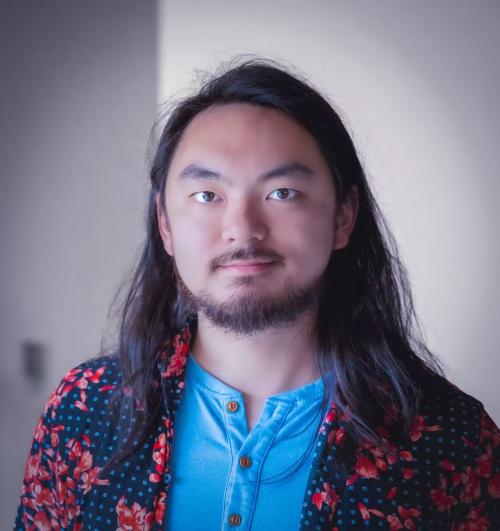
Boyu Qie joined the Department of Chemistry at the Southern University of Science and Technology (SUSTech) in Shenzhen in June 2026. Born and raised in Chengdu, Sichuan, he currently focuses on the intersections of synthetic chemistry, condensed-matter physics, electronic devices, and artificial intelligence. Through interdisciplinary approaches, he aims to develop new quantum materials and electronic applications while exploring new paradigms for data-driven materials research. Students and collaborators interested in these research areas are warmly encouraged to get in touch for discussion and collaboration!
Boyu received his bachelor’s degree as a member of the inaugural Experimental Education Reform Class at SUSTech. He subsequently earned a master’s degree in materials science from Columbia University and a Ph.D. in chemistry from the University of California, Berkeley. His doctoral advisor was Professor Felix R. Fischer, and his collaborating advisors were Professors Michael F. Crommie and Steven G. Louie in the Department of Physics. He then became a fellowship-supported postdoctoral researcher at UC Berkeley’s Bakar Institute of Digital Materials for the Planet (BIDMaP), working with Professor Aditi S. Krishnapriyan in the Department of Electrical Engineering and Computer Sciences and Professor Felix R. Fischer in the Department of Chemistry. His honors and awards include the National Natural Science Foundation of China Excellent Young Scientists Fund Program (Overseas), the U.S. Department of Energy/National Energy Research Scientific Computing Center NERSC Directors Discretionary Reserve Award and High-Impact Science at Scale Award, and a fellowship from the UC Berkeley Kavli Energy NanoScience Institute. His major research articles have been published as first-author or corresponding-author papers, including co-first and co-corresponding authorship, in journals such as Science, Nature Materials, JACS, and ACS Nano.
Education and Professional Experience
2024 – 2026 Postdoctoral Researcher: University of California, Berkeley; BIDMaP Emerging Scholar Fellowship, College of Computing, Data Science, and Society; Collaborating Advisors: Professor Aditi S. Krishnapriyan (Department of Electrical Engineering and Computer Sciences), Professor Felix R. Fischer (Department of Chemistry)
2019 – 2024 Ph.D.: University of California, Berkeley, Department of Chemistry; Advisor: Professor Felix R. Fischer; Collaborating Advisors: Professor Michael F. Crommie (Department of Physics), Professor Steven G. Louie (Department of Physics)
2016 – 2018 M.S.: Columbia University, Department of Materials Science and Engineering; Advisor: Professor Yuan Yang; Collaborating Advisor: Professor Xavier Roy (Department of Chemistry)
2011 – 2015 B.S.: Southern University of Science and Technology, Department of Chemistry; Inaugural Experimental Education Reform Class (2011), Summa Cum Laude
Research Directions
Our group integrates organic chemistry and quantum physics through a combination of experiments, theory, and artificial intelligence. We aim to construct artificial quantum materials that do not exist in nature and to investigate new characterization architectures and applications for these materials. Specifically, our current research interests include:
1. Exploring new organic quantum materials by combining organic synthesis with experimental and theoretical condensed-matter physics;
2. Developing integrated platforms that combine micro/nanodevices, MEMS, and multiple condensed-matter characterization techniques, such as STM, to uncover emerging and exotic quantum phenomena in organic quantum materials;
3. Designing microelectronic devices and quantum architectures based on new carbon-based materials for post-CMOS electronics, spintronics, and quantum technologies;
4. Developing and applying state-of-the-art artificial intelligence architectures in chemistry, condensed-matter physics, and materials science.
Awards and Funding
Research Funding:
2026 – 2029, National Natural Science Foundation of China Excellent Young Scientists Fund Program (Overseas)
2024 – 2026, UC Berkeley BIDMaP Postdoctoral Research Fund, Bakar Institute of Digital Materials for the Planet; “AI for Low-Dimensional Carbon Materials Library”
2024 – 2026, U.S. Department of Energy/National Energy Research Scientific Computing Center, NERSC Directors Discretionary Reserve Award; “High-throughput ML/DFT conjugated carbon library for organic quantum materials”
2025 – 2026, U.S. Department of Energy/National Energy Research Scientific Computing Center, NERSC High-Impact Science at Scale Award; “High-throughput ML/DFT conjugated carbon library for organic quantum materials”
2023 – 2024, UC Berkeley Kavli Energy NanoScience Institute (ENSI) Fellowship, Kavli Foundation; “Engineering non-trivial Topological Flat Bands in Lower-Dimensional Lattices”
Selected Recent Awards and Honors:
2024, UC Berkeley Bakar Institute of Digital Materials for the Planet (BIDMaP) Emerging Scholar Fellowship
2023, Cambridge–UC Berkeley Winton–Kavli Best Research Proposal Award
2023, UC Berkeley Kavli Energy NanoScience Institute (Kavli ENSI) Doctoral Fellowship