


Faculty
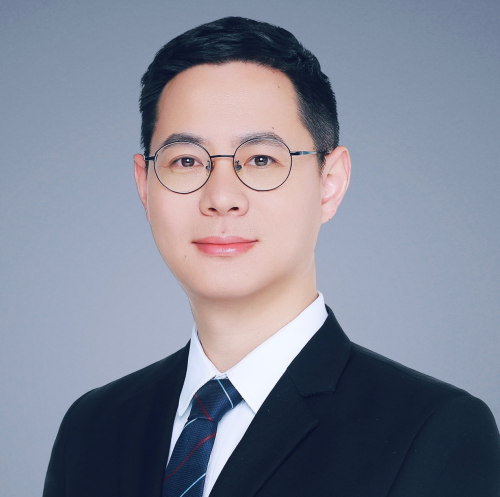
SELF-INTRODUCTION:
Dr. Jun Xu, Associate Professor at the School of Medicine, Southern University of Science and Technology (SUSTech), and Doctoral Supervisor. He has been selected for national and Guangdong provincial overseas high-caliber youth talent programs. In 2014, he graduated with a bachelor's degree in Biotechnology from Huazhong University of Science and Technology. In 2019, he obtained his Ph.D. in Basic Medical Sciences from the School of Medicine, Tsinghua University. Subsequently, he served as a visiting scholar and postdoctoral researcher at the Kobilka Institute of Innovative Drug Discovery, The Chinese University of Hong Kong, Shenzhen, and the Department of Molecular and Cellular Physiology, Stanford University School of Medicine, under the supervision of Professor Brian Kobilka, the 2012 Nobel Laureate in Chemistry. In January 2025, he joined the School of Medicine at Southern University of Science and Technology.
His research has long focused on the dynamic molecular mechanisms of G protein-coupled receptor (GPCR) signaling transduction and related drug development. To date, he has published over twenty high-quality academic papers, including research achievements as the first author or corresponding author in internationally renowned journals such as Nature, Science, Science Advances, Molecular Cell, JACS, Nature Communications, Cell Research, and PNAS. He has led multiple projects, including the National Natural Science Foundation of China and the Guangdong Provincial Excellent Youth Science Foundation.
RESEARCH: G protein-coupled receptors (GPCRs) constitute the largest family of membrane protein receptors. They perceive and respond to a diverse array of extracellular stimuli, including light, hormones, and neurotransmitters. These external signals are transduced by GPCRs into intracellular signals, which in turn regulate numerous critical physiological and pathological processes. GPCRs also represent the most successful class of drug targets.
Our research group employs a multidisciplinary research strategy, integrating chemical biology, protein engineering, molecular and cellular pharmacology, and various biophysical approaches—including nuclear magnetic resonance (NMR) spectroscopy, single-molecule fluorescence imaging, single-particle cryo-electron microscopy (cryo-EM), and hydrogen-deuterium exchange mass spectrometry (HDX-MS)—to deeply decipher the dynamic molecular basis underlying the functional diversity and complexity of GPCRs.
Furthermore, we leverage cutting-edge technologies such as DNA-encoded chemical libraries (DELs) and artificial intelligence-assisted drug design to conduct research and development on small molecule ligands targeting GPCRs—particularly biased agonists and allosteric modulators—for major health challenges like central nervous system disorders, pain, and cardiovascular diseases. Our goal is to explore novel mechanisms of drug regulation and discover new therapeutic targets, ultimately aiming to provide new strategies for the future treatment and prevention of a broad range of diseases.
EDUCATION:
2010.09–2014.06
Huazhong University of Science and Technology
Bachelor of Science (B.S.) in Biotechnology
2014.09–2019.10
Tsinghua University
Doctor of Philosophy (Ph.D.) in Biology
WOKRING EXPERIENCE:
2020.03–2021.05
The Chinese University of Hong Kong (Shenzhen), Kobilka Institute of Innovative Drug Discovery
Visiting Scholar
2021.06–2025.01
Stanford University School of Medicine, Department of Molecular and Cellular Physiology
Postdoctoral Researcher
2025.01–2026.05
Southern University of Science and Technology (SUSTech), School of Medicine
Assistant Professor, Doctoral Supervisor
2026.06- now
Southern University of Science and Technology (SUSTech), School of Medicine
Associate Professor, Doctoral Supervisor
HONORS AND AWARDS:
2011, 2013
National Scholarship
2014
Outstanding Graduate, Huazhong University of Science and Technology
2017
Avanti Polar Lipids, Inc. Fellowship Award (Cold Spring Harbor Asia Conference on Membrane Protein: structure and function)
2023
Dean’s Fellowship Award, Stanford University School of Medicine
MANUSCRIPT REVIEWER AND EDITOR:
Reviewer for prestigious journals including Nature Communications, Cell Research, Cell Discovery, and Structure.
Teaching
<Physiology> (undergraduate students)
PUBLICATIONS:
(# Equal Contribution, * Corresponding)
1. Jiemin Shen#, Teja Nikhil Peddada#, Konstantin E. Komolov, Francesco De Pascali, Alexander M. Garces, Haoqing Wang, Muhammad Ehsan, Pil Seok Chae, Michael T. Lerch, Jeffrey L. Benovic, Jun Xu*, Brian K. Kobilka*. A biased allosteric modulator functions as a molecular glue to induce β2AR dimerization. Nature, 2026 08.29.
2. Donghoon Ahn, Seungmi Kim, Jae Kyung Hyun, Jun Xu*, Ka Young Chung*. Ligand-specific conformational dynamics of the α2A-adrenergic receptor revealed by hydrogen-deuterium exchange mass spectrometry. 2026. Structure, Mar 10. Link to Paper
3. Jun Xu#, R. Qiu#, A. W. Garces, H. Hubner, X. Xu, D. Weikert, P. Gmeiner, M. T. Lerch, B. K. Kobilka*. The role of intrinsically disordered domains in G protein coupled receptor signaling. 2025, JACS, Oct 27. Link to Paper
4. G. Chen#, J. Blahova#, N. Staffen, H. Hübner, N. Nunhöfer, C. Qiu, P. Gmeiner*, D. Weikert*, Y. Du*, Jun Xu*. Mechanism and function of GPR3 regulated by a negative allosteric modulator. Nature Communications. 2025, August 27. Link to paper
5. J. Xu#, G. Chen#, H. Wang, S. Cao, J. Heng, X. Deupi, Y. Du, & B. K. Kobilka. Calcineurin-fusion facilitates cryo-EM structure determination of a family A GPCR. PNAS, 2024, Nov 20. Link to paper
6. G. Chen, N. Staffen, Z. Wu, X. Xu, J. Pan, A. Inoue, R. Han, P. Gmeiner*, Yang Du*, J. Xu*, Structural and functional characterization of the endogenous agonist for the orphan receptor GPR3. Cell Research. 2024, Jan 30. Link to paper
7. J. Xu#, Q. Wang#, H. Hübner, Y. Hu, X. Niu, S. Maeda, A. Inoue, H. Wang, Y. Tao, P. Gmeiner, Y. Du, C. Jin, &B. K. Kobilka. Structural and dynamic insights into supra-physiological activation and allosteric modulation of a muscarinic receptor. Nature communications. 2023, Jan 23. Link to paper
8. J. Xu, Y. Hu, J. Kaindl, P. Risel, H. Hübner, S. Maeda, X. Niu, H. Li, P. Gmeiner, C. Jin, B. K. Kobilka. Conformational complexity and dynamics in a muscarinic receptor revealed by NMR spectroscopy. Molecular Cell. 2019 July 11. Link to paper
9. J. Xu#, S. Cao#, H. Hübner#, D. Weikert, G. Chen, Q. Lu, D. Yuan, P. Gmeiner, Z. Liu, & Y. Du. Structural insights into ligand recognition, activation and signaling of the α2A-adrenergic receptor. Science Advances. 2022, March 4. Link to paper
10. E. A. Fink#, J. Xu#, H. Hübner#, J. M. Braz#, P. Seemann#, C. Avet, V. Craik, M. Schmidt, C. Webb, N. A. Tolmachova, Y. S. Moroz, X. Huang, C. DeLeon, C. Kalyanaraman, S. Gahbauer, M. P. Jacobson, B. L. Roth, J. J. Irwin, Y. Du, B. K. Shoichet, A. I. Basbaum, & P. Gmeiner. Structure-based discovery of non-opioid analgesics acting through the α2A-adrenergic receptor. Science, 2022, Sep 30. Highlighted by Nature Reviews Drug Discovery: “Virtual screening yields refined GPCR agonists”. Link to paper
11. G. Chen#, J. Xu#, A. Inoue#, M. F. Schmidt#, C. Bai, Q. Lu, P. Gmeiner, Z. Liu, & Y. Du. Activation and allosteric regulation of the orphan GPR88-Gi signaling complex. Nature communications. 2022, May 2. Link to paper
12. L. Wang#, J. Xu#, S. Cao, D. Sun, H. Liu, Q. Lu, Z. Liu, Y. Du, & C. Zhang. Cryo-EM structure of the AVP-vasopressin receptor 2-Gs signaling complex. Cell Research. 2021, Mar 4. Link to paper
13. H. R. Kim#, J. Xu#, S. Maeda, N. M. Duc, D. Ahn, Y. Du, & K. Y. Chung. Structural mechanism of the primary and the secondary coupling between GPCRs and the Gi/o Family. Nature communications. 2020 June 22. Link to paper
14. Z. Wu, G. Chen, C. Qiu, X. Yan, L. Xu, S. Jiang, J. Xu, R. Han, T. Shi, Y. Liu, W. Gao, Q. Wang, J. Li, F. Ye, X. Pan, Z. Zhang, P. Ning, B. Zhang, G. Chen, Y. Du. Structural basis for the ligand recognition and G-protein subtype selectivity of kisspeptin receptor. Science Advances. 2024, Aug 16. Link to paper
15. M. Bi, X. Wang, J. Wang, J. Xu, W. Sun, V. A. Adediwura, Y. Miao, Y. Cheng, L. Ye. Structure and function of a ligand-free intermediate GPCR-Gabg complex. Nature communications. 2024, accepted. Link to paper
16. K. K. Kumar, H. Wang, C. Habrian, N. R. Latorraca, J. Xu, E. S. O’Brien, C. Zhang, E. Montabana, A. Koehl, S. Marqusee, E. Y. Isacoff, B. K. Kobilka. Step-wise activation of a metabotropic glutamate receptor. Nature, 2024, April 17. Link to the paper
17. D. Ham, A. Inoue, J. Xu, Y. Du, K. Y. Chuang. Molecular mechanism of muscarinic acetylcholine receptor M3 interaction with Gq. Communications Biology, 2024, Mar 23. Link to paper
18. D. Ahn, D. Provasi, N. M. Duc, J. Xu, L. S.-Estrada, A.Spasic, M. W.Yun, J. Kang, D. Gim, J. Lee, Y. Du, M. Filizola, K. Y. Chung. Gαs slow conformational transition upon GTP binding and a novel Gαs regulator. iScience. 2023 April. Link to paper
19. D. Yuan, Z. Liu, J. Kaindl, S. Maeda, J. Zhao, X. Sun, J. Xu, P. Gmeiner, H. Wang, B. K. Kobilka. Activation of the α2B adrenergic receptor by the sedative sympatholytic dexmedetomidine. Nature Chemical Biology. 2020 March 09. Link to paper
20. S. Maeda, J. Xu, F. M. N. Kadji, M. J. Clark, J. Zhao, N. Tsutsumi, R. K. Sunahara, A. Inoue, K. C. Garcia, B. K. Kobilka. Structure and selectivity engineering of the M1 muscarinic receptor toxin complex. Science. 2020 July 10. Link to paper
21. X. Ma, Y. Hu, X. Niu, H. Li, J. Heng, J. Xu, X. Liu, C. Jin, B. K. Kobilka. Analysis of β2AR-Gs and β2AR-Gi complex formation by NMR spectroscopy. PNAS. 2020 Aug 31. Link to paper
22. M. Korczynska, M. J. Clark, C. Valant, J. Xu, E. V. Moo, S. Albold, D. R. Weiss, H. Torosyan, W. Huang, A. C. Kruse, B. R. Lyda, L. T. May, J. Baltos, P. M. Sexton, B. K. Kobilka, A. Christopoulos, B. K. Shoichet, and R. K. Sunahara. Structure-based discovery of selective positive allosteric modulators of antagonists for the M2 muscarinic acetylcholine receptor. PNAS. 2018 Feb 16. Link to paper