


Faculty
Introduction:
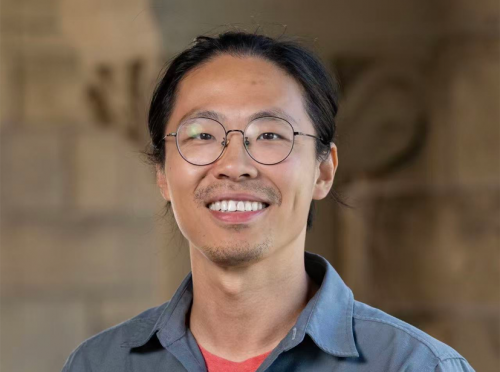
Dr. Haoqing Wang is an Associate Professor in the School of Life Sciences at Southern University of Science and Technology. He received his bachelor’s degree from the Hong Kong University of Science and Technology in 2013 and his Ph.D. from the California Institute of Technology in 2019, under supervision of Prof. Pamela Bjorkman. He subsequently joined the laboratory of Prof. Brian Kobilka at Stanford University as a postdoctoral fellow. In 2023, he became Assistant Director of Stanford ChEM-H and directly report to Prof. Carolyn Bertozzi. His research focuses on understanding protein function from multiple perspectives, including protein structure, dynamics, conformational equilibria, and molecular interactions, and on applying these insights to drug discovery and design. He has published papers in journals including Nature, Angewandte Chemie, ACS Central Science, Cell Host & Microbe, eLife, and PNAS.
Research Interests:
Advances in structural and computational biology have driven major breakthroughs in structure-based drug discovery. However, most drug design methods still treat the target protein as a single, static structure and lack a quantitative understanding of how drugs alter the conformational dynamics and equilibrium distribution of their targets. As a result, the efficacy of the resulting drugs can be difficult to control, and their use may be accompanied by side effects.
Our group integrates structure, dynamics, and conformational equilibrium to understand protein functions and develop drug design methods. By quantitatively controlling drug–target interactions and their effects on downstream signaling pathways, we aim to improve therapeutic specificity and minimize adverse effects.
current research projects include:
1. Measure protein conformational dynamics using cryoEM, MD simulations, and AI.
2. Quantitatively designing drug efficacy by modulating protein conformational equilibria.
3. Mapping receptor downstream signaling pathways through AI-enabled interactomics.
4. Automating cryoET segmentation and annotation with AI to characterize the cellular environments of proteins.
Professional Experience:
2019-2023 Stanford University Postdoc
2023-2026 Stanford University Assistant Director
2026-now Southern University of Science and Technology Associate Professor
Educational Background:
2009-2013 Hong Kong University of Science and Technology BSc
2013-2019 California Institute of Technology Ph.D.
Honors & Awards:
Caltech-Amgen Graduate Fellowship
Chinese Government Award for Outstanding Self-Financed Students Abroad
American Heart Association Postdoctoral Fellowship
Selected Publication:
Ople RS, Ramos-Gonzalez N, Li Q, Sobecks BL, Aydin D, Powers AS, Faouzi A, Polacco BJ, Bernhard SM, Appourchaux K, Sribhashyam S, Eans SO, Tsai VA, Dror RO, Varga BR, Wang H#, Hüttenhain R#, McLaughlin JP#, Majumdar S#. Signaling Modulation Mediated by Ligand Water Interactions with the Sodium Site at μOR. ACS Central Science. 2024
Krishna Kumar K*, Wang H*, Habrian C, Latorraca NR, Xu J, O'Brien ES, Zhang C, Montabana E, Koehl A, Marqusee S, Isacoff EY, Kobilka BK. Step-wise activation of a Family C GPCR. Nature. 2024
Faouzi A*, Wang H*, Zaidi SA*, DiBerto JF*, Che T*, Qu Q*, Robertson MJ, Madasu MK, El Daibani A, Varga BR, Zhang T, Ruiz C, Liu S, Xu J, Appourchaux K, Slocum ST, Eans SO, Cameron MD, Al-Hasani R, Pan YX, Roth BL, McLaughlin JP, Skiniotis G, Katritch V, Kobilka BK, Majumdar S. Structure-based design of bitopic ligands for the µ-opioid receptor. Nature. 2023
Wang H*, Hetzer F*, Huang W*, Qu Q*, Meyerowitz J, Kaindl J, Hübner H, Skiniotis G, Kobilka BK, Gmeiner P. Structure-Based Evolution of G Protein-Biased μ-Opioid Receptor Agonists. Angew Chem Int Ed Engl. 2022
Wang H*, Barnes CO*, Yang Z, Nussenzweig MC, Bjorkman PJ. Partially Open HIV-1 Envelope Structures Exhibit Conformational Changes Relevant for Coreceptor Binding and Fusion. Cell Host Microbe. 2018.
Wang H, Gristick HB, Scharf L, West AP, Galimidi RP, Seaman MS, Freund NT, Nussenzweig MC, Bjorkman PJ. Asymmetric recognition of HIV-1 Envelope trimer by V1V2 loop-targeting antibodies. Elife. 2017
Wang H, Cohen AA, Galimidi RP, Gristick HB, Jensen GJ, Bjorkman PJ. Cryo-EM structure of a CD4-bound open HIV-1 envelope trimer reveals structural rearrangements of the gp120 V1V2 loop. Proc Natl Acad Sci U S A. 2016.